
The language of red flags and green flags has become part of everyday conversations about dating and relationships. While these concepts encourage people to recognize healthy and unhealthy behaviors, the metaphor itself has an important limitation: The metaphor invites us to quantify relationships rather than navigate them, we say things such as, “Do the green flags outweigh the red ones?” or “Is this one red flag enough to end the relationship?” In doing so, we start treating relationships like a balance sheet—as though enough positive experiences can offset behaviors that deserve our attention, instead of asking a more important question: What does this moment require before I move forward?
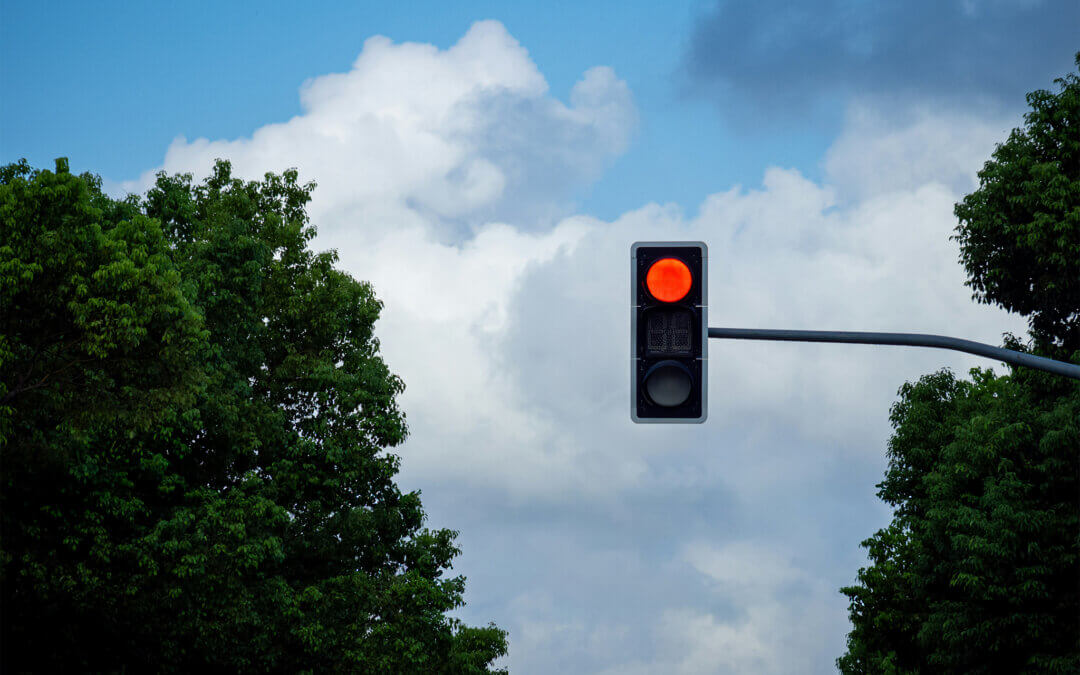
A traffic light answers that question better than a flag ever could.
When you first meet someone, you’re standing at the beginning of a road together. Every healthy interaction—a thoughtful conversation, respect for your boundaries, consistency between words and actions—isn’t a green flag. It’s a green light.
A green light doesn’t promise you’ll arrive safely at your destination. It simply tells you it’s okay to keep driving. Maybe you pass Friendship Avenue. Then Exclusivity Lane. Eventually you might reach Commitment Boulevard or Marriage Drive. Every green light allows you to move a little farther down the road.
Then, eventually, you reach a red light. Maybe they lie. Maybe they explode in anger. Maybe they dismiss your feelings or repeatedly cancel plans. A red light isn’t necessarily telling you the relationship is over. It’s telling you to stop before continuing down the same road. That’s where I believe the traffic light analogy is a much healthier way to think of relationships.
When we think in terms of flags, we often start keeping score.
“Sure, they lied…but there are ten green flags.”
“Yes, they yelled at me…but they’re usually so sweet.”
As if healthy relationships are won by having more green flags than red ones.
Traffic lights don’t work that way. The green lights don’t erase the red light, and the red light doesn’t erase every green light that came before it. The green lights simply got you this far. The red light determines whether it’s safe to keep going.
A red light means stop.
Not necessarily leave.
Just stop.
Before you continue, you look both ways. You ask questions. You slow down enough to understand what happened. Was this a one-time mistake? Are they willing to take responsibility? Do their actions change over time? What would you need to see before you feel safe moving forward again? Sometimes the light turns green because the relationship was repaired in a healthy way. Sometimes you realize this road doesn’t lead where you want to go. And that’s okay.
Not every road ends at Marriage Drive. Some relationships are only meant to reach Acquaintance Court. Others stop at Friendship Avenue. Some never make it out of the parking lot. One of the biggest mistakes we make is assuming every relationship has to continue just because it started.
Then, there are yellow lights. Yellow lights aren’t danger. They’re invitations to pay attention. Maybe they struggle with communication. Maybe they’re navigating grief. Maybe your conflict styles are different. A yellow light says, slow down before speeding ahead. Gather more information instead of rushing toward the next milestone. Yellow lights are often differences rather than dangers. They aren’t telling you to stop the relationship—they’re reminding you to be intentional about how you move forward.
Finally, don’t ignore the people who care about you. When your friends or family start expressing concern, think of them like a police officer pulling you over. It may feel frustrating in the moment, but they’re often responding to something they can see from the outside that you’ve become too emotionally invested to notice.
The goal of dating isn’t to collect green lights or avoid every yellow one. It’s to know when to move forward, when to slow down, and when to stop because healthy relationships aren’t built by driving through red lights. They’re built by respecting them. Sometimes, though, knowing what to do and feeling able to do it are two different things. For many people, the hardest part isn’t recognizing the light—it’s trusting themselves enough to respond to it because past experiences have a way of shaping what feels normal, even when the light in front of you is clear.
So, if you’ve found yourself driving through the same red lights, feeling unsure when to slow down, or questioning whether it’s safe to move forward, you don’t have to navigate that road alone. Every relationship teaches us something, but not every lesson has to be learned the hard way. Whether you’re questioning what is healthy, struggling to maintain boundaries, or finding yourself in the same relationship patterns, therapy can help you gain clarity and move forward with greater confidence. If you’re ready to take that next step, I’d be honored to walk alongside you.